
A home garage can only do so much with a floor jack and a pair of stands. They are useful, affordable, and familiar, but once you start doing regular maintenance, you quickly notice their limits. Crawling under a vehicle, shifting jack stands, and working with very little room can make even simple jobs feel awkward. That is where portable car lifts start to make sense.
Portable car lifts are designed for people who want better access without installing a permanent shop-style lift. They can raise a vehicle more evenly, create a more comfortable working height, and still be stored away when the job is done. For home garage owners, weekend mechanics, detailers, and car enthusiasts, they offer a practical middle ground between basic lifting tools and a full two-post or four-post system.
The best option depends on your garage space, vehicle weight, ceiling height, and the kind of work you normally do. Some portable lifts are made for tire and brake jobs. Others give better underbody access. A few are compact enough for tight garages, while others need more room but provide a steadier, more professional feel.
Why Portable Car Lifts Are Becoming Popular
The biggest reason portable car lifts are popular is flexibility. Many home garages are not built like professional workshops. The floor may be shared with storage shelves, bicycles, tools, household items, or a second vehicle. Installing a permanent lift may not be possible, especially in a rented home or a garage with a low ceiling.
A portable lift solves part of that problem. You can move it into position when needed and store it afterward. That makes it appealing for people who want safer and easier access but do not want their garage permanently arranged around one large machine.
There is also the comfort factor. Anyone who has changed brakes on the floor knows how tiring it can be. You bend, kneel, crawl, and constantly reposition yourself. A portable lift raises the car to a more manageable height, which makes the work feel less rough on your back and knees. It does not turn every garage into a professional shop, but it does make many common jobs much easier.
QuickJack-Style Portable Lifts
One of the most familiar portable lift styles is the low-profile frame lift, often associated with QuickJack-style systems. These lifts usually come as two separate lifting frames that slide under the sides of the vehicle. Once positioned at the correct lift points, they raise the car evenly from both sides.
This type is popular because it gives good access to the wheels, brakes, suspension, and side areas of the vehicle. It is especially useful for tire rotations, brake pad replacement, detailing, oil changes on some vehicles, and general inspection work. The frames are low enough to fit under many cars, although very low sports cars may still need ramps or blocks for clearance.
The main benefit is stability compared with a single floor jack. Since both sides rise together, the car feels more balanced. Many systems also include mechanical safety locks, which are important because you should never rely only on hydraulic pressure while working.
The limitation is height. These lifts raise the vehicle enough for most home maintenance, but not usually high enough to stand underneath. For many DIY users, that is perfectly fine. If your goal is wheel, brake, and light underbody work, this style can be one of the most practical portable car lifts for a home garage.
Portable Mid-Rise Scissor Lifts
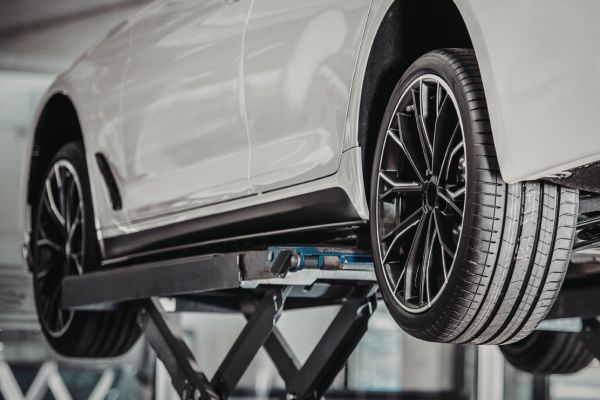
Mid-rise scissor lifts are another strong option for home garages. They use a crisscross lifting structure under the vehicle and can usually raise the car higher than smaller frame-style lifts. This makes them useful for people who want more working height but still need something more compact than a permanent lift.
These lifts are good for brake work, tire service, detailing, bodywork, and many routine maintenance tasks. Because the vehicle is lifted from the center or frame area, the wheels are normally free, which is helpful for suspension and brake jobs.
However, scissor lifts have one common drawback: the lifting structure sits under the middle of the vehicle. That can block access to certain underbody areas. If you plan to do exhaust work, driveshaft repairs, transmission jobs, or anything that requires open access along the centerline of the car, a scissor lift may feel restrictive.
For many home users, though, the trade-off is acceptable. A mid-rise scissor lift gives a solid lifting height, a stable platform, and a compact footprint. It is a sensible choice for someone who does frequent maintenance but does not have the garage height or space for a two-post lift.
Portable Low-Rise Lifts
Low-rise lifts are built for practical, everyday garage tasks. They do not raise a vehicle very high, but they raise it enough to make many jobs more comfortable. If most of your work involves wheels, tires, brakes, cleaning, polishing, and inspections, a low-rise lift can be a very useful tool.
This type is often used by detailers because it brings lower panels, wheels, and rocker areas closer to a comfortable working position. It is also helpful when doing repeated wheel removal or brake service. Instead of jacking up one corner at a time, you can lift the vehicle more evenly and work with better access.
The obvious limitation is underside access. A low-rise lift is not the best choice for major underbody repairs. You will not have the same open space that a taller lift provides. Still, not every garage owner needs that. Sometimes the best lift is simply the one that handles the jobs you actually do most often.
For smaller garages, low-rise portable car lifts can be a realistic and space-friendly option.
Portable Four-Post Lifts
Some four-post lifts are designed with mobility in mind. They are larger than other portable options, but many can be moved around with caster kits when there is no vehicle on them. These lifts allow the car to drive onto runways, then lift the whole vehicle while the tires remain supported.
A portable four-post lift is especially useful for storage. If your garage has enough ceiling height, it can allow one car to be parked above another. This makes it attractive for classic car owners, collectors, or anyone with a seasonal vehicle. It can also be used for oil changes, inspections, underbody cleaning, and general maintenance.
The downside is size. Even if it can be moved, a four-post lift still takes up a serious amount of garage space. It also may not be ideal for wheel and suspension work unless you add accessories such as a jack tray or bridge jack. Since the tires sit on the runways, they are not automatically free when the car is lifted.
For people who need storage and occasional maintenance access, a portable four-post lift can be very practical. For a small garage with limited space, it may be too much.
What to Consider Before Choosing a Portable Lift
The first thing to check is vehicle weight. Every lift has a rated capacity, and that rating should be respected. A compact car, a sedan, an SUV, and a pickup truck are not the same load. Choose a lift that comfortably handles the heaviest vehicle you plan to lift, not just the lightest one.
Ground clearance also matters. Some portable lifts are low-profile, but not all will fit under lowered cars or vehicles with side skirts. Measure the clearance at the lifting points before buying. A lift that looks perfect online may be frustrating if it will not slide under your car.
Garage floor condition is another important detail. Portable lifts still need a solid, level surface. Cracked, uneven, or weak concrete can create safety concerns. The lift should sit flat and stable before the vehicle is raised.
Storage space should be considered too. Some portable lifts can stand upright against a wall. Others need floor space even when not in use. Before choosing one, think about where it will go after the job is done. A lift is only convenient if storing it does not become another garage problem.
Safety Should Always Come First
Portable does not mean casual. A car lift is still lifting thousands of pounds, and safety has to be treated seriously every time. The vehicle should be positioned correctly, the lift points should match the manufacturer’s recommendations, and the safety locks should be engaged before you work under or around the car.
It is also important to use the lift on a clean, level floor. Small objects, oil spills, loose tools, or uneven surfaces can create problems. Take a few minutes to clear the area before lifting. It may feel slow, but it is much better than rushing a setup that supports an entire vehicle.
You should also avoid overloading the lift or modifying it in ways the manufacturer did not intend. Homemade shortcuts are never worth the risk. The best garage habits are usually simple: lift carefully, check stability, use the locks, and never place yourself under a vehicle unless you are confident it is properly supported.
Which Portable Lift Is Best for Your Garage?
The best choice depends on the kind of work you expect to do. For brake jobs, tire rotations, and general home maintenance, a low-profile frame lift is often a great fit. It is compact, practical, and easy to store compared with larger systems.
For more frequent repair work, a mid-rise scissor lift may be better because it gives extra height and a sturdier working position. It is a good match for home mechanics who want more capability but still need a relatively compact setup.
For detailing, light repairs, and wheel work, a low-rise lift may be enough. It saves space and makes repetitive tasks more comfortable. For storage and occasional service, a portable four-post lift may be the best option, as long as your garage has the room and ceiling height to support it.
The right lift is not always the biggest one. It is the one that fits your garage, your vehicle, and your routine without creating more problems than it solves.
Conclusion
Portable car lifts have changed what a home garage can be. They give everyday car owners and DIY mechanics more access, better comfort, and a safer way to handle common maintenance tasks. They are not all the same, though. A frame-style portable lift works well for compact convenience, a scissor lift offers more height, a low-rise lift suits detailing and wheel work, and a movable four-post lift can help with both storage and service.
Before choosing one, measure your garage, check your vehicle weight, study the lifting points, and think honestly about the jobs you do most often. A good lift should make your garage easier to use, not more complicated. When selected carefully, portable car lifts can be one of the most useful upgrades for a home workshop, giving you just enough professional feel without demanding a full commercial setup.