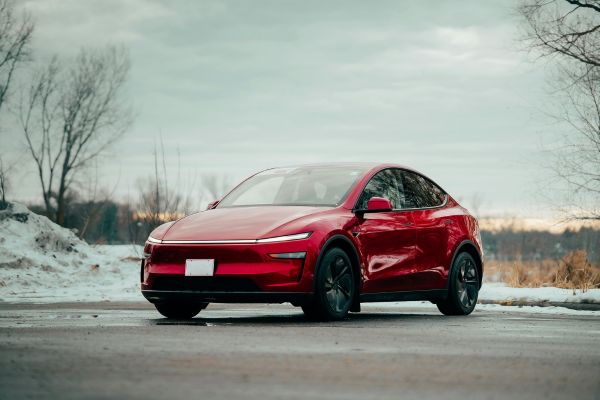

The automobile has always reflected its era. Early cars symbolized mobility and freedom. Later generations emphasized speed, comfort, design, and status. Today, the conversation is changing again. Climate concerns, air quality pressures, rising fuel costs, urban congestion, and rapid advances in engineering are pushing the industry toward a new identity—one shaped by efficiency and sustainability.
That shift is why the future of green automotive technology has become one of the most closely watched topics in transportation. It is not only about replacing one engine type with another. It involves energy systems, smarter materials, cleaner manufacturing, digital intelligence, and new ways of thinking about mobility itself.
The next chapter of the car may look less like a single invention and more like many innovations working together.
Why the Industry Is Changing
Transportation remains a major source of emissions in many parts of the world. Governments are setting new targets, cities are reconsidering pollution-heavy traffic models, and consumers are more aware of environmental impact than in previous decades.
At the same time, technology has matured. Batteries have improved, software has become central to vehicle design, and renewable energy systems are expanding.
These forces create momentum that feels structural rather than temporary.
Electric Vehicles Will Keep Evolving
Battery electric vehicles have already reshaped public expectations, but current models are likely only an early phase.
The future of green automotive technology includes lighter batteries, faster charging, improved cold-weather performance, longer lifespans, and better recycling systems. Range anxiety may continue fading as infrastructure expands and energy density improves.
Electric vehicles will likely become more ordinary, less futuristic. That may be one sign of success.
Solid-State Batteries and Next-Generation Storage
Much attention centers on battery breakthroughs, especially solid-state designs. These aim to improve safety, increase energy density, shorten charging times, and reduce some limitations associated with current lithium-ion systems.
Commercial timelines remain uncertain, as often happens with emerging technologies. But if scaled effectively, advanced batteries could significantly change vehicle design and ownership experience.
Even incremental battery improvements can have major real-world impact.
Hydrogen and Fuel Cell Possibilities
While battery vehicles dominate headlines, hydrogen fuel cell technology continues to attract interest, particularly for heavy-duty transport, buses, long-haul freight, and applications where fast refueling matters.
Passenger cars may or may not become the primary home for hydrogen in many regions, but the technology remains part of the broader green mobility conversation.
The future may not belong to one powertrain alone.
Smarter Manufacturing Processes
A green car is not defined only by what comes out of the tailpipe—or does not. Manufacturing footprint matters greatly.
Automakers are increasingly exploring renewable-powered factories, water-efficient production, lower-emission supply chains, recycled metals, and cleaner battery sourcing.
The future of green automotive technology likely includes cars built with more attention to lifecycle impact from raw material to retirement.
Recycled and Sustainable Materials
Interior materials are changing too. Recycled plastics, plant-based fibers, responsibly sourced textiles, and lower-impact composites are becoming more common.
These choices may seem secondary compared with engines or batteries, yet they reflect a larger shift. Sustainability increasingly touches the entire vehicle, not just propulsion.
Consumers may one day compare material footprints as naturally as they compare horsepower.
Lightweight Design Will Matter More
Heavier vehicles generally require more energy to move, whether powered by gasoline, electricity, or hydrogen.
That makes lightweight engineering especially valuable. Stronger alloys, improved composites, smarter structural design, and efficient packaging can reduce energy demand without sacrificing safety.
Sometimes progress comes not from adding power, but from removing waste.
Software as an Efficiency Tool
Modern vehicles increasingly rely on software to manage energy use, battery temperature, route planning, regenerative braking, and predictive maintenance.
Smart systems may help drivers charge at optimal times, preserve battery health, or reduce unnecessary energy loss. Over-the-air updates can also improve efficiency after purchase.
The greener car of the future may evolve digitally while parked in a driveway.
Vehicle-to-Grid Integration
One intriguing possibility is cars acting as energy assets rather than passive consumers.
Vehicle-to-grid systems may allow parked electric cars to store electricity and feed some of it back during peak demand, depending on infrastructure and policy design. Homes may also use EV batteries as backup storage in outages or high-cost periods.
This blurs the line between transportation and energy systems in fascinating ways.
Autonomous and Shared Mobility Effects
Autonomous technology remains uncertain in timing and scale, but if paired with shared mobility systems, it could influence sustainability.
Fewer privately owned vehicles used more efficiently might reduce material demand and parking pressure in some cities. Yet poorly managed autonomous fleets could also increase empty miles and congestion.
Technology outcomes depend heavily on policy and design choices.
Charging Will Become More Seamless
Charging today still feels like a transition-era experience in many places. Apps, payment systems, connector standards, and reliability can frustrate users.
Future charging may become faster, more standardized, and better integrated into daily life through homes, workplaces, streets, retail spaces, and highway corridors.
Wireless charging in selected settings may also grow, especially for fleets or urban systems.
Convenience often determines adoption more than theory.
Green Technology Beyond Cars
The future of automotive sustainability includes vans, buses, motorcycles, delivery fleets, agricultural vehicles, and heavy transport.
Urban buses switching to cleaner systems can influence air quality quickly. Electrified delivery fleets may reduce noise and emissions in neighborhoods. Cleaner freight technologies could reshape logistics.
The conversation is much larger than personal cars alone.
Challenges Still Ahead
Optimism should remain grounded. Battery mineral sourcing, grid capacity, charging equity, affordability, rural access, repairability, and recycling systems all require serious work.
There is also a social challenge: making cleaner mobility accessible rather than exclusive.
Green technology succeeds most meaningfully when ordinary households can benefit from it.
Human Behavior Still Matters
Even the cleanest vehicle uses space, materials, roads, and energy. Public transit, walking, cycling, smarter city planning, and reduced unnecessary travel remain important.
The most sustainable future may involve better vehicles and fewer wasteful trips.
Technology helps, but behavior shapes outcomes too.
Conclusion
The future of green automotive technology is unlikely to be defined by one dramatic invention. Instead, it will emerge through many connected advances: better batteries, cleaner factories, smarter software, sustainable materials, improved charging, hydrogen applications, and more efficient mobility systems.
Cars are changing because the world around them is changing. The road ahead may be complex, but it is also full of possibility. If innovation continues with realism and responsibility, tomorrow’s vehicles could be cleaner not only in motion, but in the way they are built, powered, and integrated into everyday life.