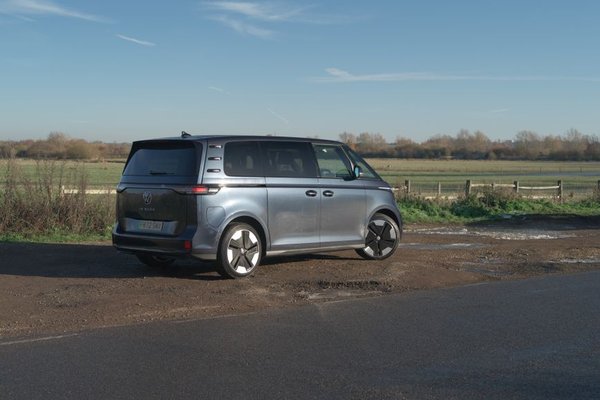

The Volkswagen ID.3 remains a useful benchmark for a mainstream electric hatchback. It is compact enough for British towns, roomy enough for family use and available with battery choices that suit everything from short commutes to regular motorway trips. That makes it a good test of what matters most in an everyday EV: usable range, straightforward charging, cabin space, comfort and sensible ownership costs.
The UK line-up is also changing. Volkswagen still lists the established ID.3, while the newer ID.3 Neo is now open for order with revised styling, a redesigned cabin and new battery options. Buyers should therefore check the exact version on offer, because range and charging figures vary by battery and model.
Volkswagen ID.3 range
For the established UK ID.3, Volkswagen quotes combined WLTP figures of roughly 240 to 371 miles depending on version, with 52kWh, 59kWh and 79kWh battery choices. The newer ID.3 Neo uses 50kWh, 58kWh and 79kWh batteries and is officially rated at about 258 to 390 miles, depending on trim.
Real motorway range will normally be lower than the laboratory figure, especially in cold weather or at sustained high speeds. A practical example helps: a 35-mile daily round trip adds up to about 175 miles over five working days. Even a shorter-range ID.3 can cover that comfortably if you can charge at home, while the larger-battery versions give more flexibility for long-distance travel.
If you are comparing different EVs, our electric car range guide is a useful companion because battery size alone does not determine how far a car will travel.
ID.3 charging and long-distance use
ID.3 charging performance depends on battery version. Volkswagen currently lists maximum DC rates of up to 145kW for the 52kWh model, 165kW for the 59kWh car and 185kW for the 79kWh version. Under suitable conditions, quoted 10-80% rapid-charge times are around 24 to 26 minutes.
That is quick enough to make motorway stops manageable without turning the ID.3 into a charging-specification contest. At home, overnight charging is the easiest ownership routine. Drivers without off-street parking should look closely at nearby public charger availability and pricing, because those factors can affect convenience and running costs more than the headline efficiency figure. Our home EV charging guide is a natural next read.
Volkswagen ID.3 interior and comfort
The Volkswagen ID.3 interior makes good use of the car’s footprint. A long wheelbase and EV packaging create generous passenger space for a hatchback of this length, particularly in the rear. The driving position is upright, and the cabin feels more open than many petrol hatchbacks of similar external dimensions.
Earlier ID.3s attracted criticism for touch-heavy controls and some ordinary-looking plastics. Newer cars have improved the infotainment and cabin presentation, while the ID.3 Neo goes further with a 10-inch driver display, a 12.9-inch central touchscreen and more physical controls in key areas. That makes it worth comparing an older discounted car with the latest model in person rather than assuming they feel identical inside.
On the road, the ID.3 is more about calm progress than excitement. Rear-wheel drive and a low-mounted battery help it feel stable and balanced, while electric power gives smooth, immediate response. Mainstream versions are quick enough for everyday overtaking and merging, and the ride is generally comfortable. Smaller wheels are the sensible choice if ride quality matters more than appearance.
Practicality and ID.3 boot space
ID.3 boot space is officially 385 litres with the rear seats upright. That is competitive for a hatchback of this size and gives enough room for weekly shopping, school bags or a compact pushchair. Volkswagen quotes a load length of around 1.6 metres with the rear seats folded, which adds useful flexibility for longer items.
The cabin-to-footprint ratio is one of the car’s strongest practical qualities. A small family can get useful passenger space without moving up to a larger electric SUV, although buyers who routinely carry bulky luggage for five people may still want something bigger.
Running costs, warranty and value
Running costs depend heavily on where you charge. Home electricity can make the ID.3 inexpensive per mile, while frequent use of high-priced rapid chargers reduces that advantage. Insurance, tyres and servicing should also be checked for the exact trim, especially if you are considering larger wheels or a faster version.
Volkswagen covers the high-voltage battery for eight years or 100,000 miles, whichever comes first, subject to the warranty terms. That is useful reassurance for both new and used buyers. Our electric car running costs guide can help you compare the wider monthly ownership picture.
Value needs careful judgement because established ID.3 stock now overlaps with the newer ID.3 Neo, and actual transaction prices can be affected by retailer discounts, finance offers and eligibility for current incentives. Compare the final on-road price, battery, equipment and charging capability rather than focusing only on list price.
Is the Volkswagen ID.3 worth buying?
The ID.3 works best as a straightforward electric family hatchback. Its strengths are efficient use of space, a comfortable driving character, useful battery choices and rapid charging that is fast enough for regular long journeys. Its weaker points are mainly the cabin finish and control layout on some earlier cars.
For local driving with reliable home charging, a smaller battery can be the better-value choice. For frequent motorway journeys, the larger battery meaningfully reduces charging stops. With the ID.3 Neo now joining the range, UK buyers should compare discounted outgoing stock against the newer cabin and longer official range before deciding.
FAQ
What is the VW ID.3 range?
The established UK ID.3 is officially rated at roughly 240 to 371 miles WLTP depending on version. The newer ID.3 Neo is quoted at about 258 to 390 miles. Real-world range varies with temperature, speed, traffic and climate-control use.
How long does an ID.3 take to rapid charge?
Volkswagen quotes around 24 to 26 minutes for a 10-80% DC charge on current established versions under suitable conditions. Actual charging speed depends on battery temperature, charger output and state of charge.
How big is the Volkswagen ID.3 boot?
The official boot capacity is 385 litres with the rear seats upright. Folding the rear seats increases load length to around 1,601mm.
Is the ID.3 a good family car?
For many small families, yes. It combines compact exterior dimensions with useful rear-seat space, a practical boot and a quiet electric drivetrain. Larger families with bulky luggage may prefer a bigger EV.
Conclusion
The Volkswagen ID.3 succeeds by making electric driving feel ordinary in a useful way. It offers a practical hatchback footprint, good cabin space, sensible charging speeds and battery options covering short commutes through to long-distance use. The best version is not automatically the one with the biggest battery; it is the one that fits your real weekly mileage, charging access and budget.